







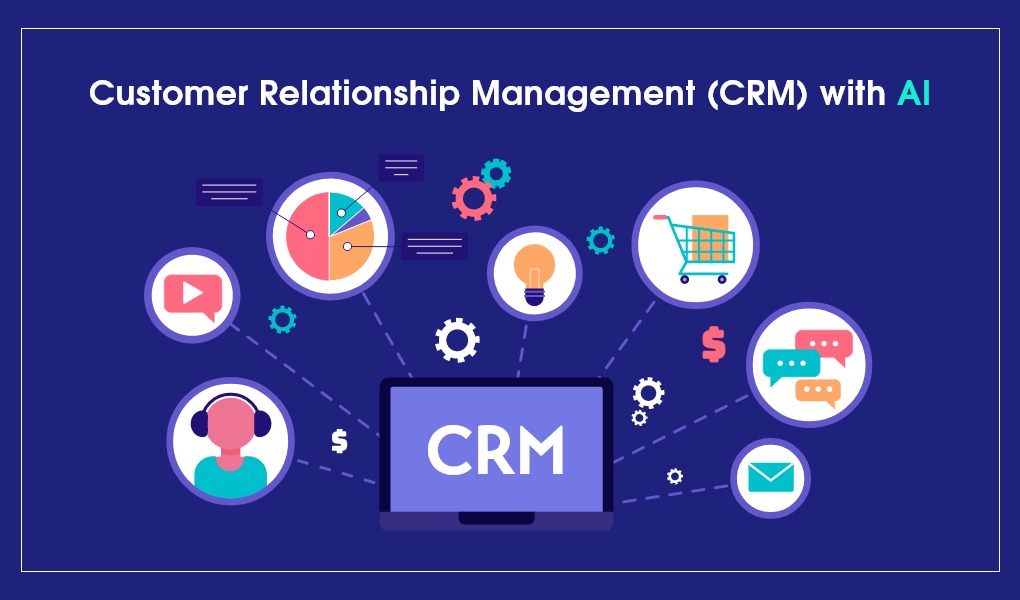
Customer relationship management (CRM) has always been at the heart of successful companies. But with changing customer expectations and industries digitalizing at lightning speed, conventional CRMs no longer cut it. Today, businesses require intelligent systems to do more than hold customer data—they require systems that analyze, forecast, and automate. That’s where ai powered crm software is changing the game.
By integrating artificial intelligence (AI) with CRM, companies are now able to better know customers, make informed decisions, and tailor experiences in a way they never could before. Let us explore how AI-powered CRM systems are transforming industries, how the features of them make them useful, and why they could be the future of customer interaction.
What is AI Powered CRM Software?
Deep down, ai driven crm software is a conventional CRM with added AI functionality in the form of machine learning, predictive analytics, and natural language processing. Rather than just logging customer interactions, it actively reads data and provides suggestions.
Picture a system that can inform your salespeople which leads are most likely to convert, or an AI chatbot that resolves frequent customer questions in seconds—leaving your support team for more challenging problems. That’s the true potential of an AI-driven CRM.
Why Companies Are Moving Towards AI-Driven CRM Systems

The transition from traditional processes to digital software has already transformed customer management. Today, the implementation of ai-enabled crm systems is elevating it further. Organizations are no longer merely monitoring interactions; they’re leveraging AI insights to forecast customer requirements.
Following are some major benefits businesses reap:
Predictive Lead Scoring: Direct efforts on promising prospects.
Smarter Customer Service: Chatbots and AI assistants resolve frequent issues in real time.
Data-Driven Marketing: Personalize campaigns based on insights from customer behavior.
Reduced Manual Work: Automate routine tasks such as scheduling and reporting.
In summary, companies save time, enhance customer experience, and increase revenue.
The Role of AI-Powered CRM Integrations
One of the greatest advantages of ai-powered crm integrations is that they can integrate with other systems—such as ERP, marketing automation software, and eCommerce solutions. Through this, companies are able to ensure data moves smoothly between departments.
This provides a single, consolidated view of the customer journey, allowing teams to work effectively and not create silos.
Delving into AI-Powered CRM Platforms
Various ai-powered crm platforms offer distinct features. Some are focused on sales forecasting, while others are customer support or marketing automation-focused. Companies must assess their objectives and industry requirements before deciding on a platform.
At the end of the day, the right platform should align with your workflows, scale as your business grows, and provide easy-to-use AI tools that empower teams.
Industry-Specific AI-Powered CRM Solutions

Another benefit of this technology is its adaptability across industries. Ai-powered crm solutions are no longer “one-size-fits-all.” Instead, they’re built to serve specific industry requirements.
Retail & eCommerce: Personalized product recommendations and dynamic pricing.
Banking & Finance: AI-powered fraud detection and risk forecasting.
Education: Automatic tracking of student progress and communication.
These customized solutions achieve the highest ROI in solving specific problems.
The Impact of AI-Powered CRM Transformation
The path to digital-first business typically begins with ai-powered crm transformation. By transforming legacy systems with AI-powered capabilities, companies shift from reactive to proactive engagement.
Rather than reacting to issues once they occur, AI enables teams to foresee challenges and address them before they reach customers. This change leads to improved response time, increased satisfaction, and boosted loyalty.
This U.S. government resource provides authoritative insights on AI standards and innovations, supporting your discussion on AI-driven CRM solutions. Citing NIST strengthens by referencing a reputable .gov source.
Selecting the Best AI Powered CRM

There are numerous ai powered crm options out there, and selecting the best one relies on a number of factors:
- Ease of integration with current tools
- Scaling for future growth
- Depth of AI functionalities (chatbots, analytics, forecasting)
- Industry-specific customization
- User-friendly dashboards and reporting
Firms that invest in the appropriate tool experience quicker team adoption and a more evident return on investment.
Growth of AI Powered CRM in the USA
The use of AI powered CRM USA products is increasing rapidly. Companies from all industries—particularly in eCommerce, healthcare, and logistics—are heavily investing in AI CRMs.
Why? Because the American market is very competitive, and businesses require sophisticated tools to compete. AI makes businesses offer faster, smarter, and more targeted customer service.
Microsoft Dynamics 365 CRM Consulting: An Outstanding Choice
Among the greatest platforms, there is Microsoft Dynamics 365. With microsoft dynamics 365 crm consulting, businesses are able to incorporate AI functionalities such as automated sales analysis, predictive analytics, and customer opinion analysis.
Consulting services help companies make the most of such facilities by tailoring Dynamics 365 to their individual requirements.
The Role of Custom CRM Software Development
Though ready-to-use platforms are in vogue, some organizations prefer crm software development for entirely customized solutions. A custom-built CRM guarantees that each feature supports the company’s operations, the requirements of the industry, and plans for expansion in the future.
Integrating AI into tailor-made CRMs makes them even more intelligent, quicker, and more predictive. Companies like Soft Korner make sure to enable its customers with the best digital solutions.
AI-Powered CRM in the Healthcare Sector
The healthcare industry crm has come a long way from appointment scheduling. AI CRMs assist hospitals and clinics in evaluating patient data, forecasting health risks, and tailoring treatment suggestions.
For example, predictive analytics can warn the providers about impending complications so that proactive care can be provided. This enhances the patient outcomes and increases the confidence in healthcare services.
AI-Based CRM in Logistics and Supply Chain Management
The functionality of crm in logistics and supply chain management is no less significant. AI CRMs can streamline the delivery routes, predict demand, and ensure easy communication with clients.
This brings about quicker deliveries, less mistakes, and tighter customer connections—logistics’ vital determinants, where trust is paramount.
Why AI Powered CRM Software is the Future
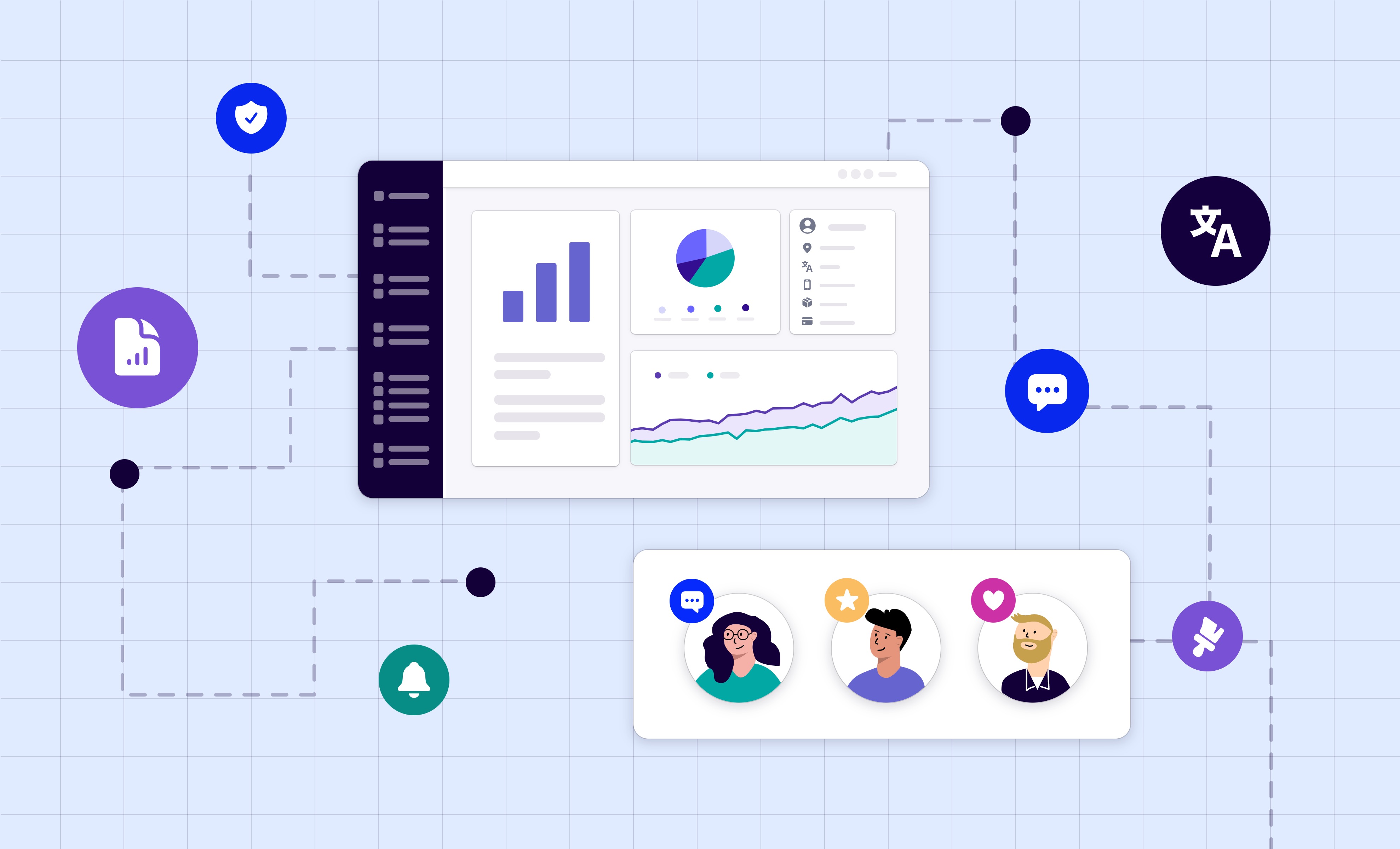
The future of ai powered crm software can only brighten. Plans for the future include:
Voice-Powered CRMs: AI voice commands shaping the way tasks are done.
Hyper-Personalization: Personalizing each customer touchpoint in real time.
Advanced Predictive Analytics: Preempting customer needs even before they emerge.
Companies that adopt AI today will remain ahead of the game, and those who wait will be fighting an uphill battle to meet customer demands.
Last Thoughts
The future of CRM is more than technology—it’s about establishing genuine, long-term customer relationships. AI driven CRM software enables companies to move beyond mere record-keeping and really see and know customer needs.
From medicine and shipping to retail and banking, AI CRMs are transforming the way industries function. Through pre-existing platforms, bespoke development, or professional consulting, businesses today have infinite avenues to enhance customer interactions.
Ultimately, AI doesn’t substitute human touch—it augments it. The companies that strike a balance between intelligent automation and human compassion will be the ones that succeed in the years to come.
