







The Implementation Of Power Bi Kpi Dashboard
- Home
- portfolio
- Case Study
- The Implementation Of Power Bi Kpi Dashboard
The Implementation Of Power Bi Kpi Dashboard
Client Challenge
The problem that the leadership team was encountering was a familiar yet significant issue: information was everywhere, and knowledge was nowhere.
The important data on the key performance was distributed among financial systems, sales tools, marketing sites, and operational databases. Tediousness with regards to reporting was characterized by heavy reliance on manual excel files which resulted in:
Lack of consistency in the definition of KPIs in different departments.
Delayed reporting cycles
Poor leadership visibility.
Challenging in connecting marketing, sales and financial performance.
The organization was in need of one point of truth, a centralized, trusted and real-time analytics solution that would be able to assist with making strategic decisions.
Soft Korner’s Objective
Soft Korner was contracted to design and deploy a Power BI analytics solution of enterprise grade, which would:
Concentrate KPIs to all the significant departments.
Give a live view of business performance.
Empower executives and teams, to make decisions more rapidly, and in a data-driven way.
Use automated and controlled dashboards instead of manual reporting.
Soft Korner’s Approach
KPI & Business Alignment
Soft Korner started by conducting stakeholder workshops to learn how businesses wanted to achieve their aims, the decision-making requirements, and reporting gaps. KPIs were also well-articulated and standardized in such a way that there was a commonality in the finance, sales, marketing, and operations.
This was done to make sure dashboards were not merely attractive to the eye- but making a strategic sense.
Data Integration & Modeling
The data of Soft Korner was consolidated and included data of several internal systems, which included:
Finance: revenues, expenditure, profitability, budgets.
Sales: pipeline, conversion, targets and actuals.
Marketing: performance of the campaigns, generation of leads, ROI.
Operational systems: cross-functional performance measures.
To ensure: all data was optimally modeled, transformed and cleaned using Power BI data models.
Accuracy and consistency
High performance
Scalability towards data expansion.
Dashboard Design and Development.
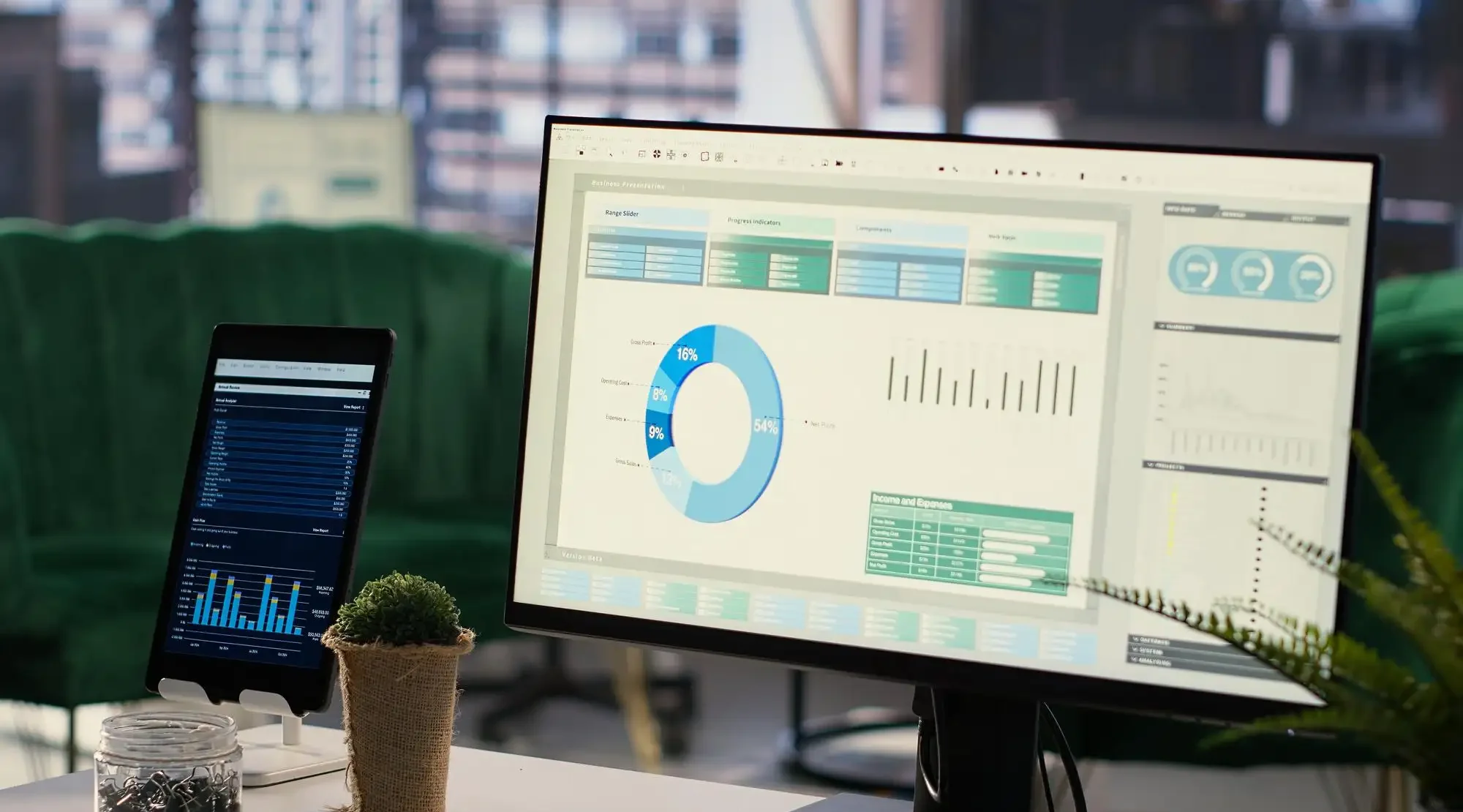
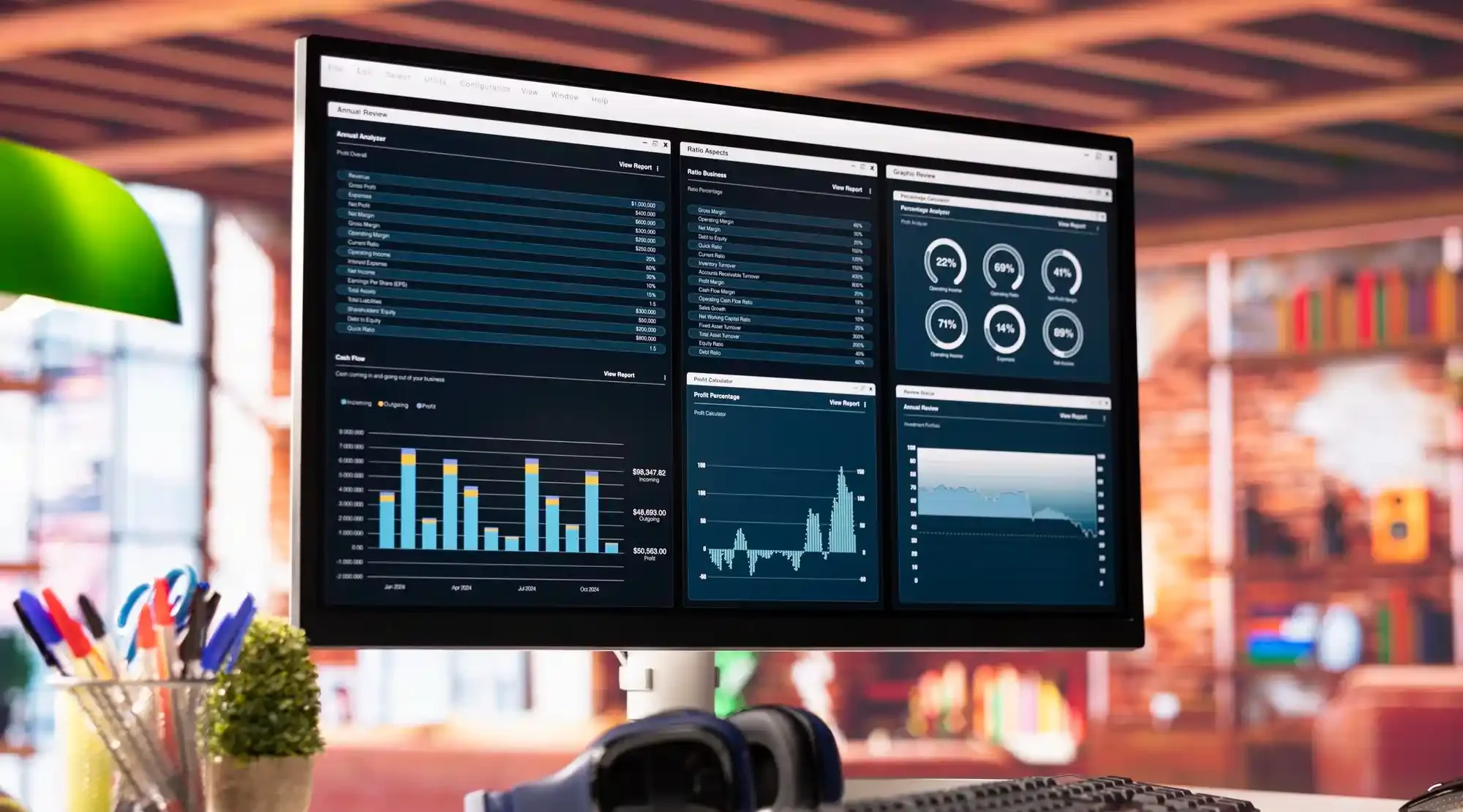
Aligned with the needs of the business functions and the leadership requirements, Soft Korner created and deployed 11 interactive Power BI dashboards.
Dashboard Structure Incorporated:
Top-level performance tracking executive dashboard.
Operational insights at departmental level.
Trans-functional perspectives linking marketing expenditure, sales performance and financial success.
Both dashboards were user-friendly, so that insights can be easily available to both technical and non-technical users.
Automation, Governance & Optimization of Performance.
In order to do away with manual reporting, Soft Korner adopted:
Robotic data refreshing timetables.
Predominantly uniform KPI definitions and data models.
Best practices of governance to guarantee data reliability.
This minimized reliance on spreadsheets and increased trust on data throughout the organization.
Key Features & Capabilities
Centralized KPI Monitoring
A single analytics solution that provides in-time finance, sales, and marketing data.
Executive & Departmental Level Perspectives
Personalized dashboards where every stakeholder would only view insights that are pertinent to his or her position.
Cross-Functional Analytics
Capacity to evaluate correlations amid marketing investment, sales performance and financial results.
Interactive Reporting and Drill-Down Reporting.
The high-level KPIs can be translated to granular data allowing users to determine trends, risks, and opportunities in more detail.
Automated Data Governance and Reporting.
Trustworthy, modernized dashboards with minimum human touch.
Business Impact
As the Power BI solution at Soft Korner was in place, the organization managed to attain:
Increased transparency in the overall business performance.
Quick and more assured leadership level decision-making.
Massive man-hour savings on manual reporting by excel sheet.
Greater cohesion between the financial, sales, and marketing departments.
An analytics base that is scalable to accommodate growth.
Technology Stack
Microsoft Power BI
Multi-source internal enterprise system data integration.
Streamlined data structures and KPI systems in line with business requirements.
Why Soft Korner
The strengths of Soft Korner that are reflected in this project include:
In-depth knowledge on business-first analytics.
Knowledge of Power BI, data modelling and KPI structures.
Skill to transform complicated data into comprehensible and practical information.
Focus on ecosystem, governance, and value over time.
Soft Korner did not create dashboards, it facilitated a culture of data.