








Agentic AI Is Reshaping Business Operations: A Practical Guide for Smarter Growth
Businesses across the USA and Canada are under constant pressure to improve efficiency while reducing operational costs. Traditional automation has helped with repetitive tasks, but today’s organizations need technology that can analyze situations, make decisions, adapt to changing conditions, and complete multi-step processes with minimal human involvement.
This is where Agentic AI stands out.
Unlike conventional AI tools that simply respond to prompts, Agentic AI can independently plan actions, solve problems, and achieve goals within defined boundaries. It enables organizations to automate entire business processes rather than individual tasks, leading to faster operations, better customer experiences, and more intelligent decision-making.
If your organization is looking to improve productivity without increasing overhead, understanding Agentic AI is no longer optional—it’s becoming a competitive necessity.
Why Businesses Are Moving Beyond Traditional Automation
Many companies already use automation software, yet employees still spend hours switching between applications, manually updating CRM systems, reviewing emails, creating reports, and following up with customers.
These disconnected processes create several challenges:
- Slow response times
- Human errors in repetitive work
- Inconsistent customer experiences
- Lost sales opportunities
- Higher operational costs
Businesses need systems that don’t just automate actions but understand objectives and complete work intelligently.
That’s exactly where Agentic AI delivers value.
Understanding the New Generation of AI
Many business leaders still ask, What are AI agents and why are they becoming so important?
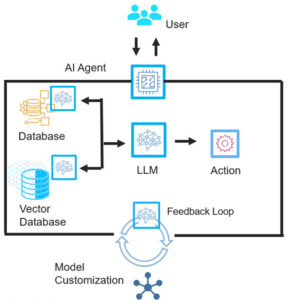
AI agents are intelligent software systems designed to observe information, make decisions, execute tasks, and continuously adapt based on results. Instead of waiting for every instruction, they work toward predefined business goals while collaborating with existing software and databases.
This allows organizations to automate complete workflows instead of isolated activities.
How Agentic AI Works
A typical intelligent workflow follows several stages:
Understand the Goal
The AI receives a business objective, such as qualifying sales leads or resolving customer support tickets.
Collect Information
It gathers relevant information from CRMs, emails, databases, documents, calendars, or external systems.
Analyze the Situation
Instead of following rigid rules, it evaluates available information to determine the best course of action.
Take Action
The system performs approved tasks automatically while following organizational policies.
Learn and Improve
Every completed task helps improve future performance through continuous optimization.
This adaptive process allows Agentic AI to handle increasingly complex business operations.
Agentic AI vs Traditional AI Assistants
Many organizations compare Agentic AI vs chatbots before investing in intelligent automation.
Traditional chatbots primarily answer questions based on predefined conversations or prompts. They are reactive and depend heavily on user input.
Agentic AI, on the other hand, is proactive. It can identify problems, plan multiple actions, coordinate different systems, and complete objectives with minimal supervision.
Instead of simply answering a customer question, an AI agent could verify account information, generate a personalized response, update internal systems, schedule follow-ups, and notify the sales team automatically.
Real Business Applications
Organizations across multiple industries are already deploying intelligent agents to improve daily operations.
Some practical Autonomous AI agents examples include:
- Sales agents qualifying leads automatically
- Customer service agents resolving support requests
- HR agents screening job applications
- Finance agents processing invoices
- Procurement agents comparing vendor pricing
- Marketing agents optimizing campaign performance
These intelligent systems reduce manual work while improving consistency.
Coordinated Intelligence Across Teams
As businesses grow, one intelligent agent may not be enough.
That’s where Multi-agent systems become valuable.
Instead of relying on one AI assistant, organizations deploy specialized agents that collaborate with one another.
For example:
- One agent handles customer communication.
- Another updates CRM records.
- Another prepares reports.
- Another analyzes performance metrics.
Together, these specialized agents complete complex workflows far more efficiently than isolated automation tools.
Beyond Business: Everyday Intelligent Automation
While enterprise adoption continues to accelerate, consumers are also seeing practical applications through AI agents for home automation.
These systems can coordinate lighting, climate control, security monitoring, appliance scheduling, and energy management without requiring constant user commands.
Although business use cases remain the largest growth area, consumer adoption demonstrates how intelligent agents are becoming part of everyday life.
Creating Smarter Business Operations
Organizations are increasingly investing in Smart automation with AI agents because traditional workflow automation often struggles with changing conditions.
Intelligent agents can:
- Prioritize urgent requests
- Adapt to unexpected situations
- Recommend optimal decisions
- Coordinate multiple departments
- Reduce repetitive administrative work
The result is a more agile organization capable of responding quickly to customer needs.
Building Intelligent AI Solutions
Developers often rely on frameworks such as LangChain AI agents to build advanced enterprise solutions.
These frameworks help connect language models with external applications, databases, APIs, memory systems, and business logic.
Instead of creating isolated AI tools, organizations can develop scalable intelligent systems that integrate seamlessly into existing operations.
Transforming End-to-End Workflows
Modern organizations increasingly use AI agent workflow automation to eliminate manual handoffs between departments.
For example, after a customer submits an inquiry:
- Information is verified automatically.
- CRM records are updated.
- Sales representatives receive prioritized leads.
- Meetings are scheduled.
- Personalized emails are generated.
- Performance metrics are logged.
Instead of requiring several employees, much of the workflow happens automatically while humans remain in control of approvals and strategic decisions.
Key Advantages Businesses Can Expect
The Benefits of agentic AI extend far beyond saving time.
Organizations commonly experience:
- Faster decision-making
- Higher employee productivity
- Better customer experiences
- Reduced operational costs
- Improved data accuracy
- Scalable business operations
- Increased revenue opportunities
- Stronger competitive advantage
Perhaps most importantly, employees spend less time on repetitive administrative work and more time solving meaningful business challenges.
Looking Ahead
The Future of agentic AI 2026 points toward even greater collaboration between humans and intelligent systems.
Businesses are expected to adopt AI agents that coordinate across departments, monitor performance in real time, support strategic planning, and continuously optimize business processes.
Rather than replacing employees, these intelligent systems will increasingly serve as digital teammates that enhance human decision-making while handling routine operational work.
Organizations that begin implementing intelligent automation today will likely be better positioned to adapt as AI capabilities continue to evolve.
Final Thoughts
Agentic AI represents a major shift from simple automation toward intelligent business execution. Instead of completing isolated tasks, it enables organizations to achieve complete business outcomes with greater speed, accuracy, and adaptability.
For businesses across the USA and Canada, adopting Agentic AI is becoming a strategic investment rather than an experimental technology. Companies that embrace intelligent automation early can improve operational efficiency, strengthen customer relationships, and create more resilient business processes in an increasingly competitive market.
Whether you’re modernizing customer service, optimizing sales operations, or streamlining internal workflows, intelligent AI agents offer a practical path toward sustainable digital transformation.
Soft Korner | Digital Transformation Partner helps organizations explore modern AI-driven solutions that align technology with real business goals, enabling smarter operations and long-term growth.
Frequently Asked Questions
1. What makes Agentic AI different from traditional AI?
Agentic AI can plan, make decisions, and complete multi-step tasks independently, while traditional AI typically responds only to direct prompts.
2. Which industries benefit most from Agentic AI?
Healthcare, finance, manufacturing, retail, logistics, customer service, and professional services are among the industries seeing significant value from intelligent AI agents.
3. Is Agentic AI suitable for small businesses?
Yes. Small businesses can use AI agents to automate customer support, sales follow-ups, scheduling, reporting, and administrative tasks without large IT teams.
4. How can businesses prepare for Agentic AI adoption?
Start by identifying repetitive workflows, ensuring high-quality data, integrating existing systems, and implementing AI gradually with proper governance and human oversight.
