





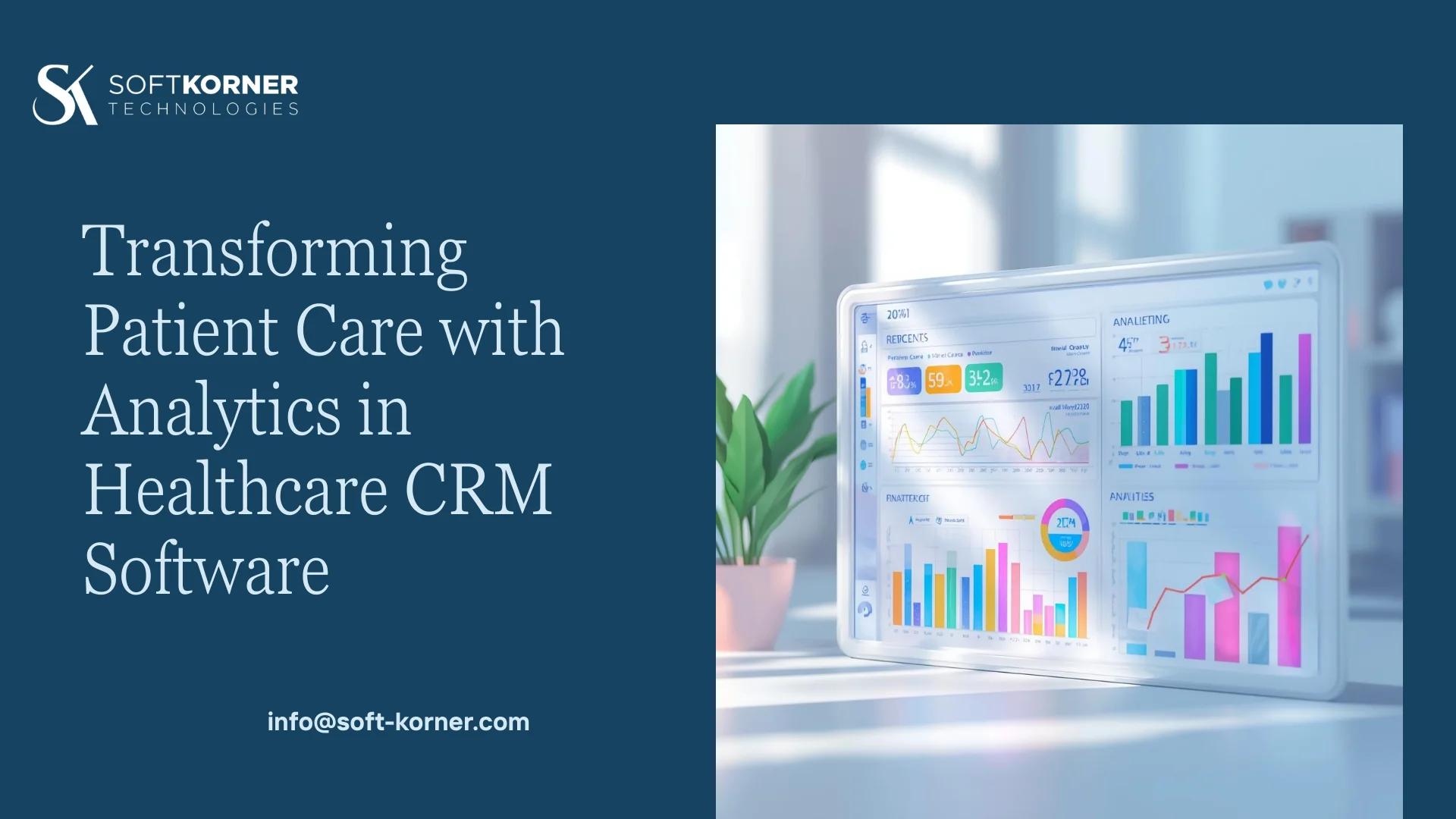
In the present-day healthcare setting, which is characterized by a high pace, healthcare providers have been pressured to provide improved care and maintain an efficient operation. Patients demand one-on-one communication, follow-ups, and active assistance. The Soft Korner solution, Predictive analytics-driven healthcare CRM software, a technology that does not only do menial tasks in managing the relationships of patients but also predicts their needs.
Predictive analytics eliminates guesses when treating patients. The analysis of the past data, behavioral patterns, and the medical history will enable healthcare providers to predict possible problems, plan the appropriate interventions, and enhance patient interaction. The practice is transforming the manner in which hospitals, clinics, and specialty practices in the USA and Canada are conducted.
The Relevance Of Predictive Analytics In Health Care Crm Software
The traditional healthcare systems tend to respond to the needs rather than preempting them. Lack of foresight among providers leads to issues such as appointments that have not been made, incomplete care, and high readmission rates. This dynamic is altered with healthcare CRM software loaded with predictive analytics:
Risk forecasting of patients: Predict at-risk patients with pre-complications.
Custom care plans: Customized follow-ups and reminders depending on the behavior of the specific patient.
Operational efficacy: Automate daily communication and simplify clinical processes.
The result? Better patient results, reduced cost of operations and improved confidence between patients and providers.
The Problems That Healthcare Providers Encounter
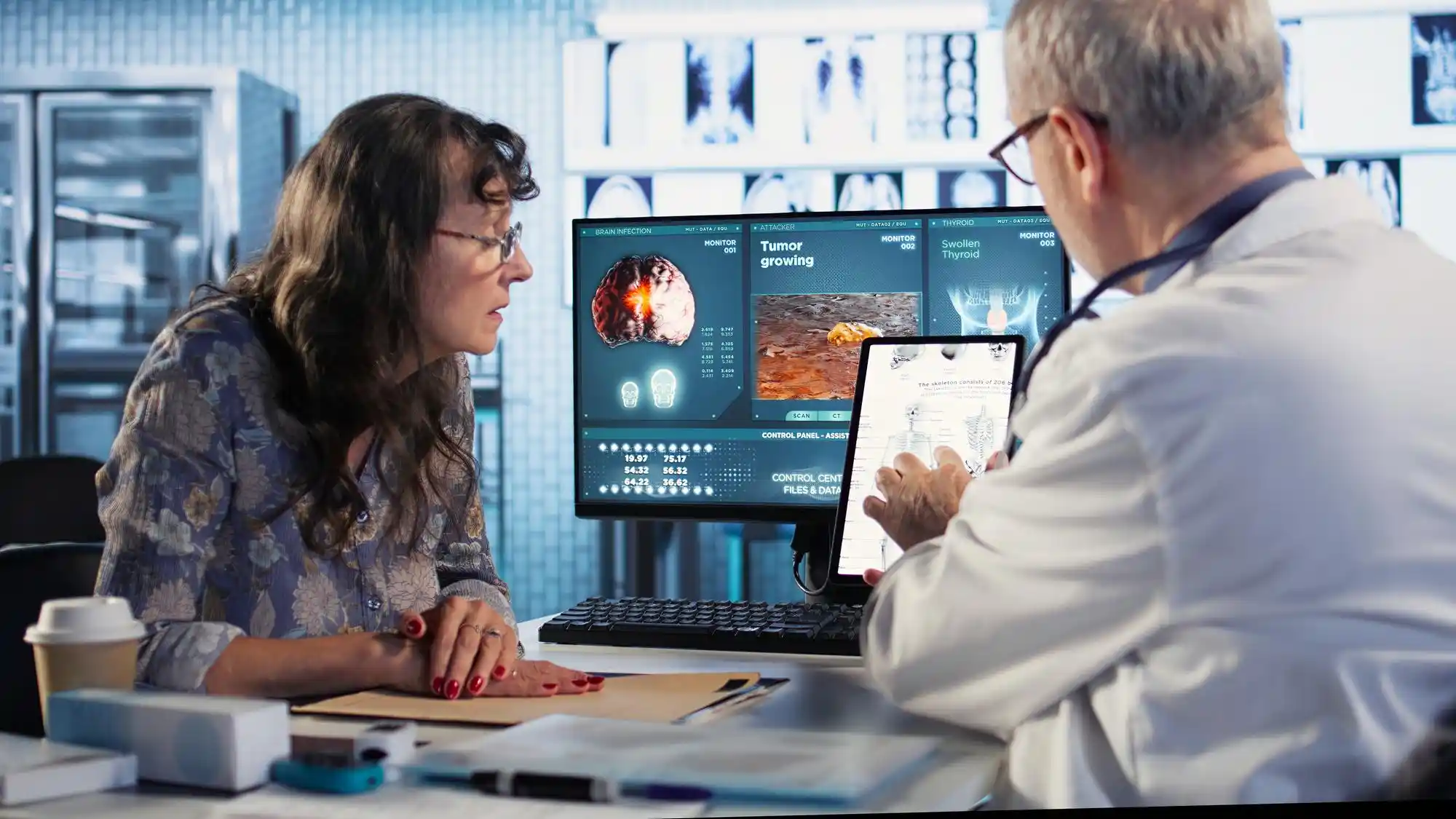
Despite the EMRs and scheduling systems, most organizations can hardly deal with:
Fragmented patient experiences – Clinicians do not see the entire history of patients.
Manual Workflows – Manual work is wasted in care-taking.
Poor involvement – The lack of commitment comes with either general or delayed interaction; this lessens compliance with care plans.
Tiny predictive power – In the absence of data-informed insights, interventions are corrective and not preventive.
These issues underscore the need to incorporate predictive analytics within the healthcare CRM software development services.
Guided Process to Adopt Predictive Analytics

Step 1: Define Your Goals
Ask yourself what you want to accomplish. Is it decreasing no-shows, chronic disease management, or increasing patient satisfaction? The technology adoption process is aimed by clear objectives.
Step 2: Prepare Your Data
Forecasting is based on clean and structured data. Examine your EMRs, appointment history, communication history, billing history, and patient feedback. Seal any loopholes in order to be precise in terms of prediction.
Step 3: Select the appropriate Crm in Healthcare Industry
Choose a vendor that will be compatible with your EMRs, enable real-time analytics, meet the requirements of HIPAA (USA) or PIPEDA (Canada), and offer secure cloud resources. Such guidance of an expert and health care CRM consulting or development services can facilitate this process.
Step 4: Engage Your Team
Create an interdisciplinary team of clinicians, IT personnel, administrators, and leaders of patient engagement. Teamwork is effective to facilitate the adoption process and make all people aware of how predictive insights can enhance day-to-day operations.
Step 5: Predictive Models construction
Create models with the help of past patient records to predict such outcomes as readmission risk, risk of missed visits, and adherence to care. Validated models are actionable because they can be relied upon by clinicians.
Step 6: Reflect the Insights in the Day-to-Day Work
Predictive analytics is best used to make daily decisions. The staff can take initiative easily due to automated notifications, customized follow-ups and prioritized lists of patients.
Step 7: Monitor and Improve
Monitor such important indicators as attendance of appointments, readmissions, and patient satisfaction rates. Feedback can be used to optimize models and processes so that there is continuous improvement.
Real-Life Impact
A community Ontario hospital was experiencing increasing readmission and poor follow-up. When they installed healthcare CRM software that included predictive analytics, they experienced:
Decrease in readmission by 24 percent in a year.
Thirty-five percent follow-up visit growth with the help of automated reminders.
Staff efficiency and patient satisfaction.
This example demonstrates how predictive insights transform reactive healthcare into proactive care.
How to Beat Implementation Challenges
Data privacy: Make sure that you comply with HIPAA and PIPEDA, encrypt data, and perform frequent audits.
Team resistance: Train, emphasize benefits and match analytics to staff workflows.
System integration: Partner with the seasoned healthcare CRM development services to integrate EMRs, scheduling tools, and old systems.
Conclusion
Predictive analytics on healthcare CRM software development services is not a piece of technology but a strategic benefit. Healthcare providers in the USA and Canada can provide higher quality care with minimized spending by predicting the needs of patients, enhancing interaction, and simplifying the process of care delivery.
Soft Korner is a Digital Transformation Partner that makes these solutions work well in organizations. We have expertise in healthcare CRM consulting and Dynamics 365 CRM consulting services to develop to bring patient care to life where it is a more data-driven, proactive experience.
Make the best move toward smarter personalized healthcare.
Frequently Asked Questions
What is predictive analytics in healthcare CRM software?
It consists of the utilization of past data and machine learning to predict patient behavior and health outcomes to enable providers to operate preemptively.
What is its effect in enhancing patient engagement?
Patients will have higher chances of adhering to treatment plans by providing timely and personalized follow-ups, reminders, and care recommendations.
Is patient data secure?
Yes, systems that comply with the HIPAA and PIPEDA rules, use encryption, and role-based access will be fine.
Are smaller clinics an advantage as well?
Absolutely. Predictive insights can be used to personalize care, minimize no-shows, and efficiently manage patient populations even in small practices.
